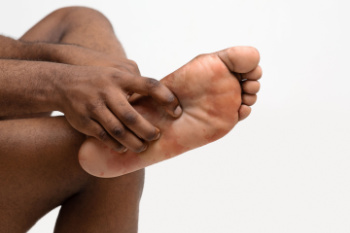
Plantar fasciitis is a main cause of heel pain that affects the thick band of tissue along the bottom of the foot. It often begins with sharp discomfort during the first steps in the morning or after periods of rest. Pain may ease with movement but return after long periods of standing. The heel may feel tender, tight, or slightly swollen, and pressure along the arch can increase discomfort. Causes include repetitive strain, poor foot support, and tight calf muscles. Abnormal foot structure that places excess stress on the tissue may also contribute. A podiatrist can evaluate foot mechanics, confirm the diagnosis, and develop a treatment plan tailored to the patient. Care options include supportive footwear, custom orthotics, and targeted exercises to reduce tension and improve flexibility. Early treatment can help prevent chronic pain and further injury. If you think you may have plantar fasciitis, it is suggested that you make an appointment with a podiatrist.
Plantar fasciitis is a common foot condition that is often caused by a strain injury. If you are experiencing heel pain or symptoms of plantar fasciitis, contact one of our podiatrists from William Street Podiatry. Our doctors can provide the care you need to keep you pain-free and on your feet.
What Is Plantar Fasciitis?
Plantar fasciitis is one of the most common causes of heel pain. The plantar fascia is a ligament that connects your heel to the front of your foot. When this ligament becomes inflamed, plantar fasciitis is the result. If you have plantar fasciitis you will have a stabbing pain that usually occurs with your first steps in the morning. As the day progresses and you walk around more, this pain will start to disappear, but it will return after long periods of standing or sitting.
What Causes Plantar Fasciitis?
- Excessive running
- Having high arches in your feet
- Other foot issues such as flat feet
- Pregnancy (due to the sudden weight gain)
- Being on your feet very often
There are some risk factors that may make you more likely to develop plantar fasciitis compared to others. The condition most commonly affects adults between the ages of 40 and 60. It also tends to affect people who are obese because the extra pounds result in extra stress being placed on the plantar fascia.
Prevention
- Take good care of your feet – Wear shoes that have good arch support and heel cushioning.
- Maintain a healthy weight
- If you are a runner, alternate running with other sports that won’t cause heel pain
There are a variety of treatment options available for plantar fasciitis along with the pain that accompanies it. Additionally, physical therapy is a very important component in the treatment process. It is important that you meet with your podiatrist to determine which treatment option is best for you.
If you have any questions, please feel free to contact one of our offices located in William Street in New York, NY, Forest Hills, NY, and Broadway in New York, NY . We offer the newest diagnostic and treatment technologies for all your foot care needs.

